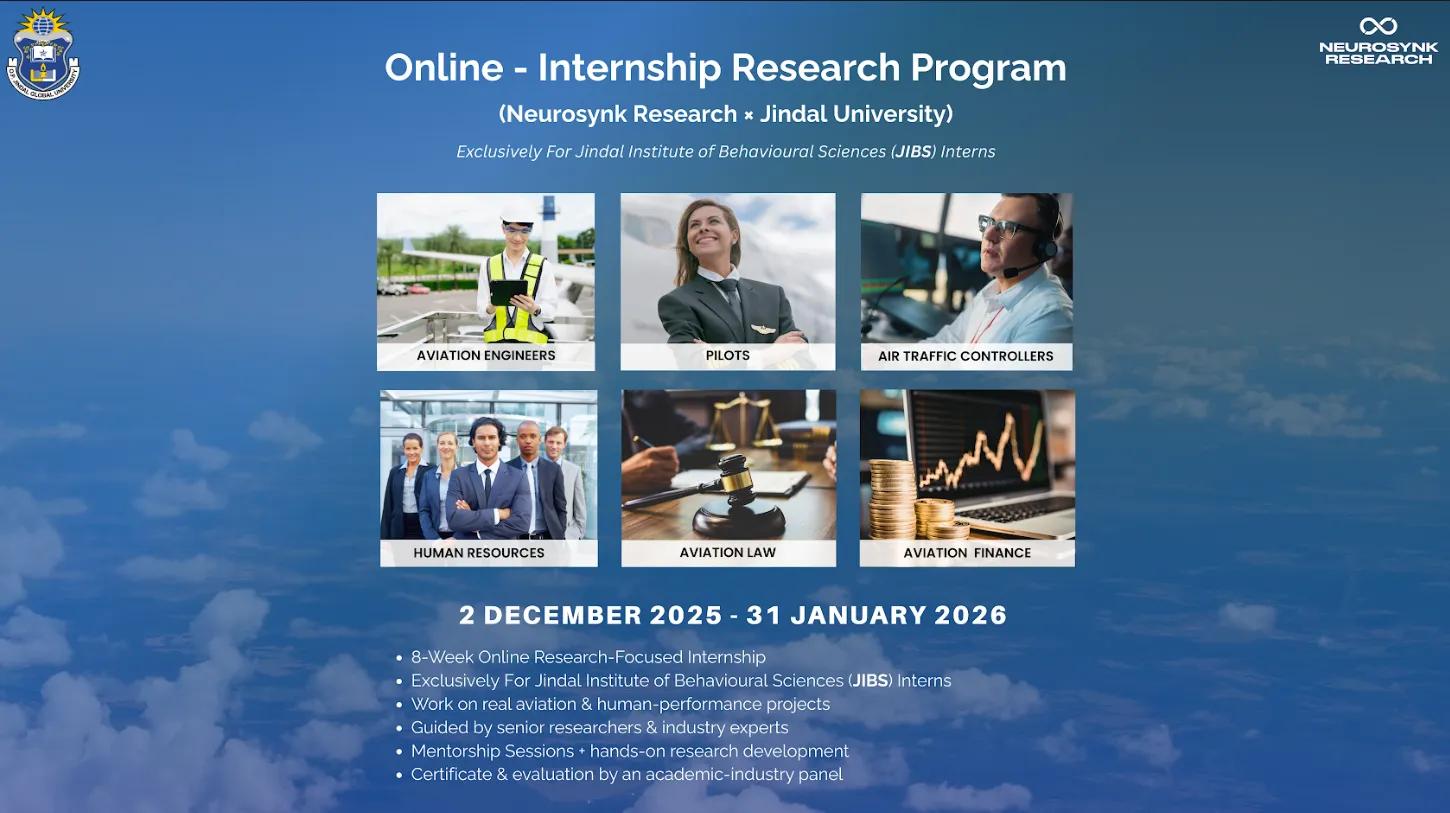
Neurosynk Research has officially commenced its Internship Research Program in collaboration with the Jindal Institute of Behavioural Sciences (JIBS). The program is currently underway and marks a significant step toward strengthening industry–academia collaboration in the field of applied psychology, with a special focus on the aviation sector.
This selective research internship has been designed for a limited cohort of shortlisted students from JIBS, offering them a structured opportunity to engage in real-world, industry-oriented psychological research. The primary objective of the program is to deepen students' research competencies while enabling them to explore the growing and highly specialized aviation psychology domain.
Program Structure and Focus
The internship follows a two-month research framework, during which interns are guided through the complete research lifecycle. Participants are exposed to:
- Research conceptualization and problem identification
- Aviation-specific psychological themes and applications
- Research design, methodology, and ethical considerations
- Data collection, analysis, and interpretation
- Academic writing and research presentation skills
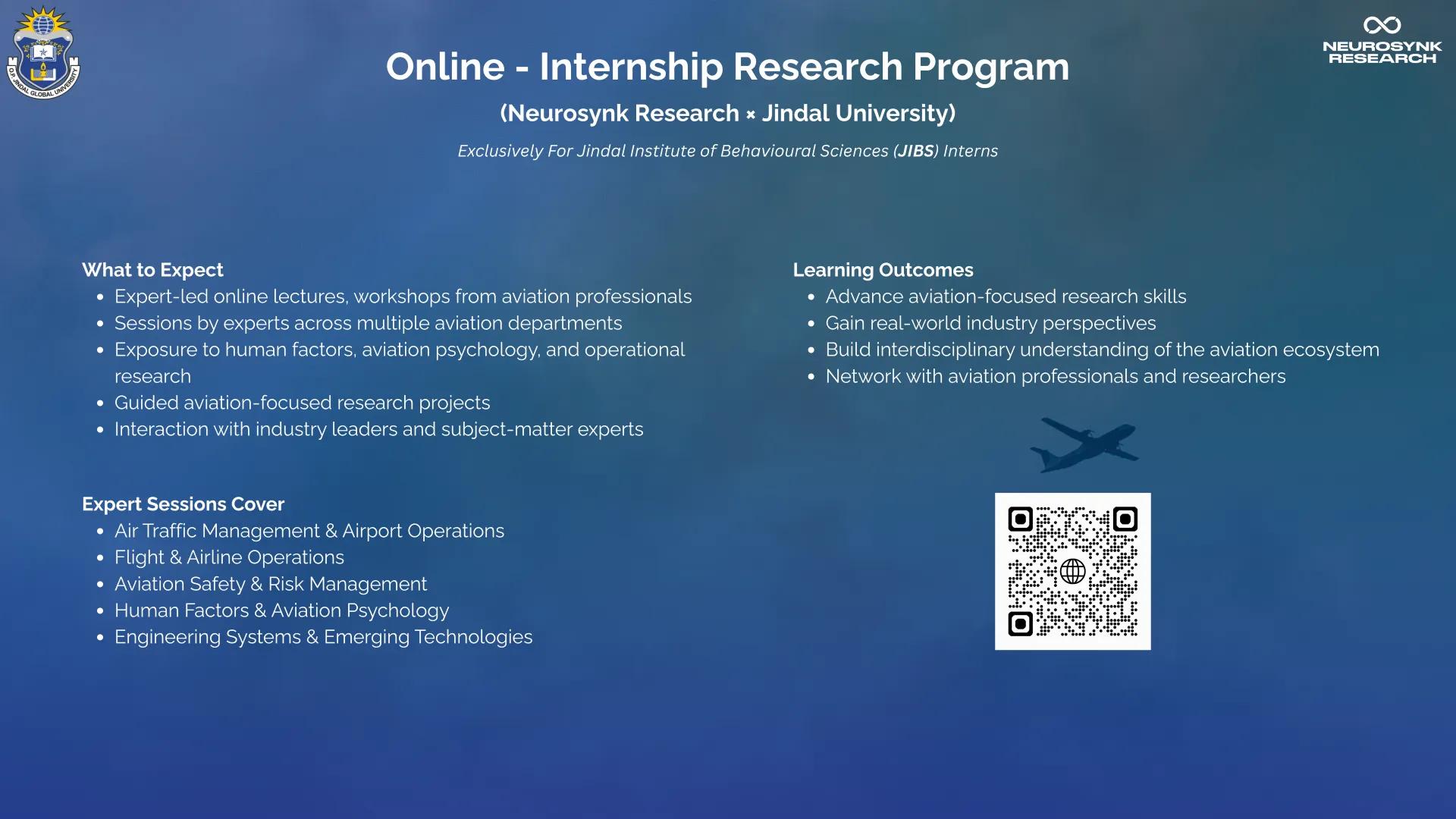
All research topics under this program are carefully curated to align with the aviation industry, including areas such as human factors, mental health and well-being of aviation professionals, cognitive performance, stress and fatigue management, and applied behavioural science in high-risk environments.
Mentorship and Professional Exposure
Interns receive structured mentorship from domain experts and researchers associated with Neurosynk Research, bridging the gap between theoretical learning and practical application. Through expert interactions, guided discussions, and continuous feedback, students gain insight into how psychological research is translated into industry solutions and policy-relevant insights.
Building Future-Ready Psychologists
The Neurosynk × JIBS Internship Research Program aims to prepare future psychology professionals for emerging industry roles, particularly within aviation and allied sectors. By integrating rigorous research training with industry relevance, the program encourages students to think beyond conventional academic pathways and explore specialized, impact-driven careers.
As the program progresses, interns continue to engage actively in research tasks, collaborative learning, and professional development, making this initiative a meaningful step toward shaping India's next generation of psychology professionals for the aviation industry.
February 15, 2026
Neurosynk Research at Wings India: Advancing Human-Centric A...

February 15, 2026
Sustainability in Aviation: Why Mental Health is the Missing...
January 26, 2026

January 10, 2026